
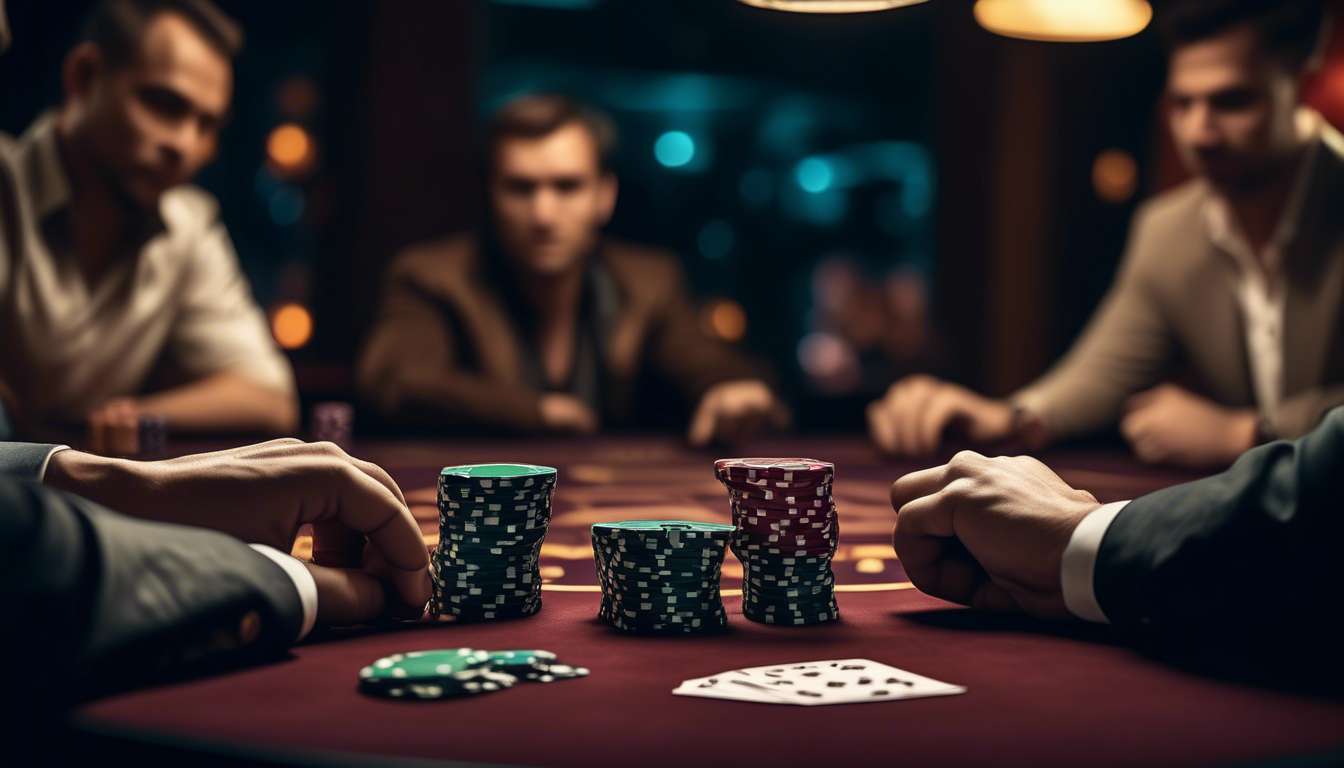
Poker players worldwide engage in the ongoing discussion about whether luck or skill determines success at the tables. This timeless card game combines strategic depth with elements of chance in a way that fascinates newcomers and veteran professionals equally, creating endless debate about which factor ultimately matters most.
We often gather around tables, both physical and virtual, to test our mettle, analyze our opponents, and navigate the unpredictable waters of the deck. Yet, the question persists: how much of our success can we attribute to practiced skill, and how much to the whims of fortune?
This ongoing debate fuels countless discussions and strategies as we strive to refine our game. Together, we dissect the elements of poker, seeking to understand where skill ends and luck begins. Key elements include:
- Bluffing
- Reading opponents
- Probability
- Variance
Join us as we delve into this fascinating topic, exploring perspectives that challenge and enlighten our understanding of poker.
Skill in Poker: Defined
In poker, skill is the ability to consistently make optimal decisions based on incomplete information and strategic thinking.
We rely on our understanding of probability to guide us through each hand by:
- Carefully assessing the likely outcomes.
- Weighing our options.
Skill isn’t just about knowing the rules—it’s about:
- Reading the table.
- Predicting opponents’ moves.
- Making the best call with the cards we’re dealt.
In our poker community, we recognize that skill and probability are our guiding lights.
While luck certainly plays a role, especially in the short term, it’s the skilled players who prevail over time. By honing our skills, we increase our chances of success and reduce the influence of luck. This shared dedication to mastering these elements brings us closer as a group.
As we improve, our collective experiences and insights help us grow stronger together.
Embracing skill over luck unites us and makes our poker journey truly rewarding.
The Psychology of Bluffing
Bluffing in Poker
Bluffing in poker challenges our ability to manipulate perceptions and project confidence, even when our cards aren’t strong. It’s a dance of skill and intuition that can make us feel connected to a shared, thrilling experience.
The Power of Bluffing
As we bluff, we wield the power of probability, turning it into a tool that increases our chances of success, despite the cards in our hands. Our skill lies in knowing when to bluff, choosing the right moment when our table image can sway our opponents’ perceptions.
The Role of Luck
Luck plays an undeniable role in poker, but bluffing allows us to tip the scales in our favor by creating an illusion of strength. It’s about:
- Reading the room
- Feeling the energy
- Sharing in the collective uncertainty with our fellow players
Navigating the Social Landscape
Together, we navigate this complex social landscape, each bluff a testament to our shared desire to outsmart and outplay. In this communal dance, we find our place, sharpening our skills with every hand.
Impact of Reading Opponents
Understanding Opponents’ Tells and Betting Patterns
Understanding our opponents’ tells and betting patterns can significantly enhance our decision-making process in poker. By honing our skill in reading these cues, we create a shared understanding within our poker community.
We’re not just relying on probability or luck; we’re actively engaging with the nuances of human behavior. This skill allows us to identify when an opponent might be bluffing or holding a strong hand, thus informing our strategic decisions.
Building Community Through Shared Insights
Our ability to read opponents brings us closer together as we discuss insights and experiences. It’s about feeling that shared excitement when a well-played hand confirms our suspicions.
Luck might play a role in the cards we’re dealt, but it’s our skill in interpreting opponents that often determines our success.
Elevating Our Game
By continually refining this skill, we elevate our game, making each session more than just a gamble. We create a sense of belonging, knowing that we’re part of a group that values insight and shared growth in the game of poker.
Examining Probability in Poker
In poker, calculating the odds is essential for making informed decisions that enhance our chances of winning. Understanding probability is a vital skill within our community of players. While luck plays a role in each hand, our ability to assess probabilities often separates winners from losers.
Each card dealt shifts the odds, and our shared goal is to estimate these changes accurately. Together, we embrace the challenge of balancing skill with the unpredictable nature of luck.
We learn to:
- Calculate our outs
- Consider pot odds
- Judge implied odds
All while remembering that probability is our guiding star. Our collective experience teaches us that poker is not just a game of chance; it’s a strategic endeavor where skill meets probability.
As we hone these skills, we strengthen our community, united by the thrill of outsmarting chance. We’re not just players; we’re part of a vibrant group, always striving to understand and master the beautiful complexity of poker.
Navigating Variance in Gameplay
In poker, we constantly adapt to the inherent variance that influences each game and challenges our strategies. As a community, we understand that variance is a double-edged sword with luck on one side and skill on the other. While probability guides our decisions, luck can sometimes tilt the balance in unexpected ways.
Our journey through each hand involves:
- Embracing uncertainty.
- Honing our skill to navigate it effectively.
Together, we recognize that variance isn’t just a hurdle; it’s an integral part of the game that adds excitement and unpredictability. By focusing on skill, we strive to minimize the impact of luck and make decisions that align with the probabilities.
We learn from each win and loss, understanding that over time:
- Skill will outshine fleeting moments of fortune.
As we share stories and insights with one another, we strengthen our bond. We find comfort in the shared experience of navigating variance, knowing we’re all in this together.
Strategies for Enhancing Skill
To elevate our poker game, we focus on continuous learning and deliberate practice to refine our decision-making skills.
Community and Collaboration:
- By diving into strategy books and engaging in discussions with fellow players, we create a sense of community where insights and experiences are shared.
- This collaboration enhances our skills and fosters a supportive environment where we all grow together.
Understanding Probability:
- Understanding probability is crucial. We study hand odds and practice calculating them quickly.
- By simulating different scenarios, we train ourselves to recognize patterns and make strategic choices under pressure.
Analyzing Past Hands:
- Analyzing past hands and identifying mistakes helps us learn from experience.
- We discuss these analyses with our group, gaining diverse perspectives and new strategies.
Testing and Adjusting Skills:
- Through online forums and live games, we test our skills and adjust our tactics accordingly.
By committing to these practices, we transform poker from a game of chance to one where our skill shines, making us a stronger, more cohesive community.
The Role of Luck in Poker
In poker, luck is an unpredictable force that significantly impacts the outcome of any hand. Even when players hone their skills and calculate probabilities, luck can still play a pivotal role.
Imagine the thrill of drawing an unexpected card that turns the tide in your favor. It’s moments like these that connect players, reminding us that we’re all part of a shared experience where luck plays its mischievous role.
While skill and probability guide our strategies, luck can sometimes override even the best-laid plans. We’ve all experienced holding a strong hand, only to be outdone by an opponent’s lucky draw.
This element of surprise makes poker both challenging and exhilarating. In our community, we:
- Embrace uncertainty
- Understand that luck can level the playing field
- Offer everyone a chance at victory
By acknowledging luck’s role, we foster camaraderie, celebrating those unpredictable moments that make poker truly unique.
Achieving a Balanced Approach
In our pursuit of poker mastery, we aim to blend strategic skill with an acceptance of luck’s unpredictable nature.
We recognize that poker isn’t just about knowing the odds and calculating probabilities; it’s about:
- Reading the room
- Understanding our opponents
- Adapting to the ever-changing dynamics of the game
Our shared journey is about finding that sweet spot where skill meets chance, creating a balanced approach that enhances our experience and success at the table.
We embrace the thrill of uncertainty, knowing that luck can either be a friend or a foe. By honing our skills, we increase our odds of making the right decisions when probability is on our side.
Together, we learn to navigate the ebb and flow of fortune, recognizing:
- When to rely on our expertise
- When to trust in the randomness of the cards
This balance fosters a sense of belonging among us, as we grow and learn from each hand dealt.
How do professional poker players view the role of luck in their overall career success?
We professional poker players believe luck plays a significant role in our overall career success.
While skill is crucial, luck can sometimes make or break a game. It adds an element of unpredictability that keeps things exciting.
Embracing both luck and skill is part of what makes poker so intriguing. Our careers are a blend of calculated decisions and fortunate breaks.
Finding the balance between the two is key to our success.
What are some historical examples of poker games where luck played a decisive role?
In some historical poker games, luck decisively dictated the outcome, leaving players astounded.
One memorable example occurred when a player, seemingly down and out, drew the one card needed to secure a winning hand. Such instances serve as poignant reminders of luck’s unpredictable nature in poker.
Despite our best efforts to strategize and analyze, these moments highlight the humbling reality that luck can swoop in and change the game in an instant.
How does the perception of luck versus skill differ between amateur and professional poker players?
Amateur vs. Professional Perception of Luck and Skill in Poker
Amateur poker players often attribute their wins to luck, feeling that outcomes are largely out of their control.
In contrast, professional poker players understand the importance of skill in achieving consistent long-term profits.
Professional Focus:
- Strategic decision-making
- Minimizing the impact of luck
By recognizing the role of skill over luck, professionals can elevate their game and stay ahead in the competitive world of poker.
Conclusion
In conclusion, mastering the game of poker requires a delicate balance of skill and luck.
While skill is crucial for making strategic decisions and reading opponents, luck can ultimately influence the outcome of individual hands. By honing your skills, understanding probability, and embracing the unpredictability of variance, you can increase your chances of success at the poker table.
Remember, in the debate of luck versus skill in poker, it’s not about choosing one over the other, but rather integrating both aspects to become a formidable player.